







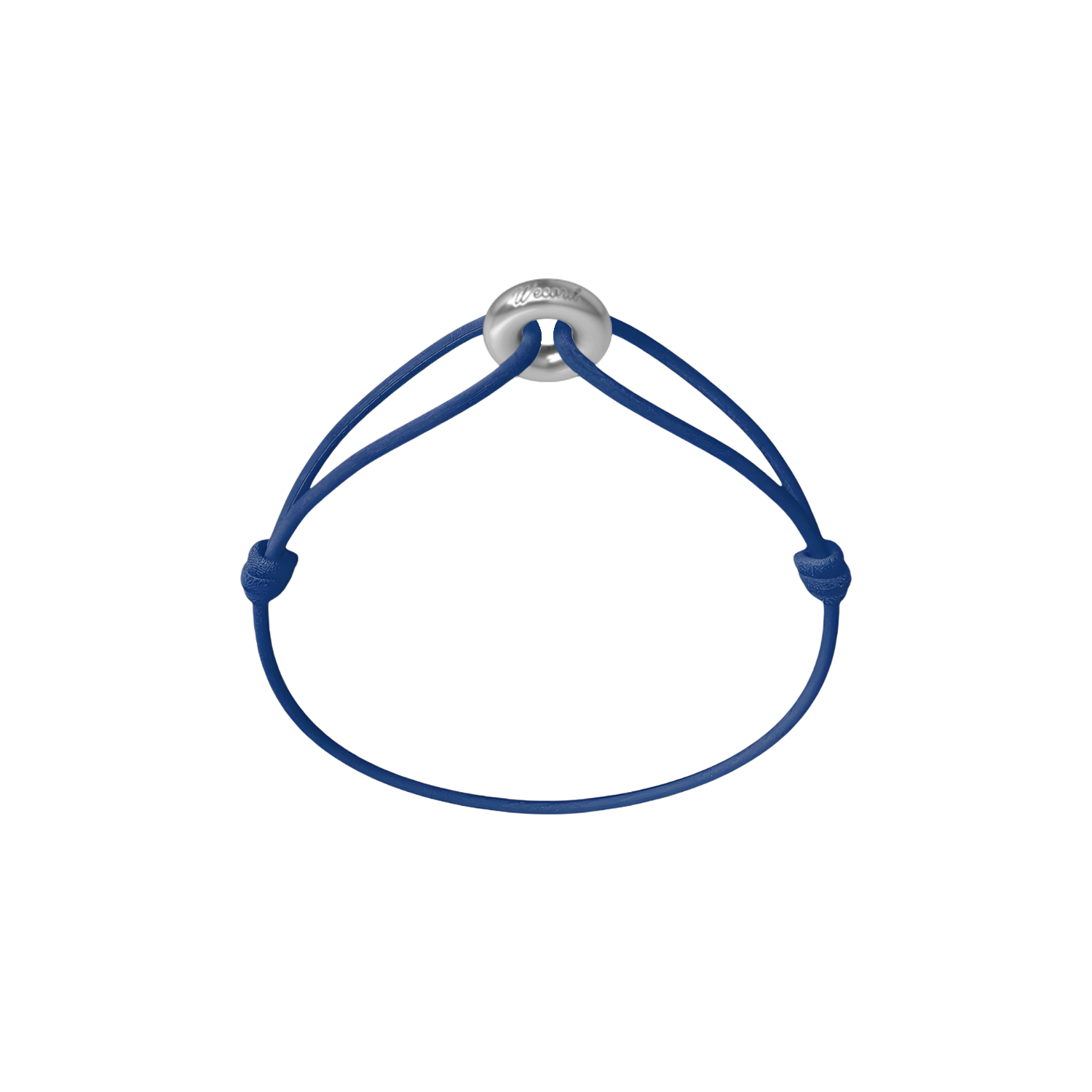
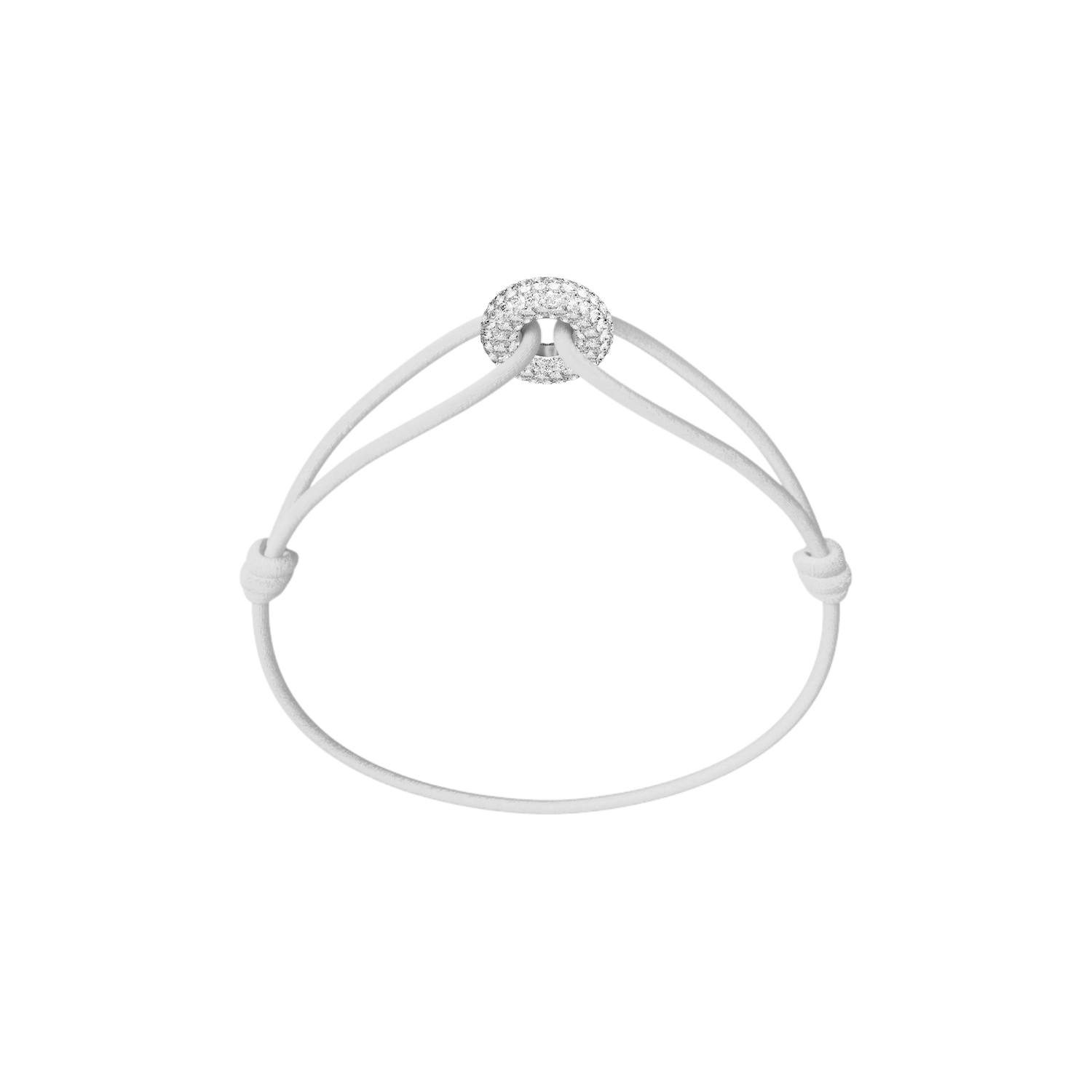

How to Clean Silver and Gold Vermeil Jewellery: The Complete UK Care Guide
If you have ever Googled "how to clean silver jewellery" you have probably been told to use toothpaste, scrub with baking soda, or soak the piece in white vinegar. Most of that advice is wrong, and on certain pieces it does real damage. Toothpaste contains abrasives designed to scrub plaque off teeth. Used on silver, it scratches the surface. Used on rhodium plated silver or gold vermeil, it strips the plating and ages the piece by years in a single clean.
This guide does the opposite. It walks through what actually works for the materials Wecord uses (925 sterling silver with rhodium plating, 18K gold vermeil at 3 microns, sapphire crystal, 316L stainless steel, natural gemstones, and lab grown diamonds) and warns you off the household methods that look effective at first but quietly shorten the life of your jewellery. Read this once and you will know how to keep every piece looking new for years.
The Mistakes That Ruin Jewellery (Read This First)
Before any cleaning method, the more important thing is what to avoid. These five popular techniques are the most common reasons jewellery goes from beautiful to dull within a year.
Toothpaste. The original silver cleaning hack. Toothpaste contains hydrated silica and other abrasives engineered to scrub enamel. On solid sterling silver it leaves microscratches that catch light differently afterwards. On any plated piece (rhodium plated silver, gold vermeil, gold plated) it strips the plating layer. If your jewellery has any kind of coating or finish, never put toothpaste anywhere near it.
Baking soda paste. The same problem. Bicarbonate of soda is a fine abrasive. It works on tarnish because it physically scrubs silver away, taking the tarnish with it. Repeat that often enough and the piece becomes thinner and softer. On vermeil or rhodium plated silver, you can wear through the plating in three or four cleans.
The aluminium foil and salt method. This works through electrochemistry rather than abrasion, but the catch is the salt. Salt is corrosive. Repeated exposure pits the metal at a microscopic level, and any gemstone in the piece can suffer. It also does nothing for plated finishes because it only reacts with the silver underneath, not the gold layer on top.
White vinegar soaking. Acid based methods strip tarnish but they also strip plating. Vinegar will remove rhodium and gold from the surface of your piece while it cleans. Lemon juice does the same thing. Anything acidic enough to cut through tarnish is acidic enough to damage the finish.
Silver dip solutions. The kind sold in supermarkets. These are aggressive chemical baths that work brilliantly on antique silverware and badly on modern jewellery. They pull rhodium plating clean off in seconds, they damage soft gemstones like lapis lazuli and malachite, and the residue they leave behind continues reacting with the metal long after you have rinsed it.
The pattern across all five is the same. They work fast but they age the piece. The right cleaning methods are slower, gentler, and protect the finishes that make the jewellery look the way it does.
Understanding What You Are Cleaning
Different materials need different care. The first step is knowing what each piece actually is. Wecord pieces fall into these categories.
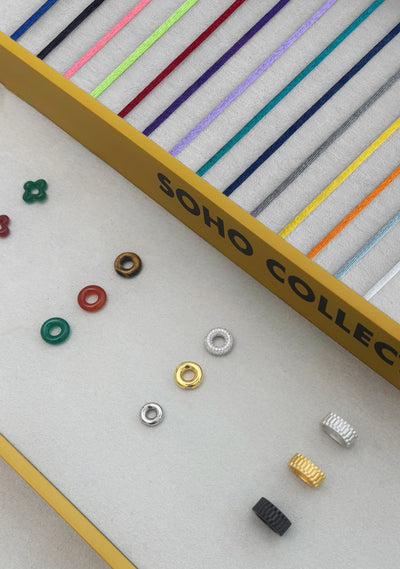
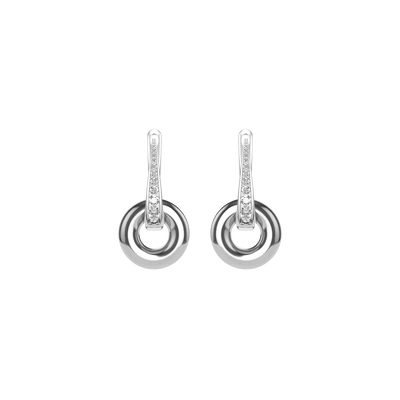
925 sterling silver with rhodium plating. The silver versions of the Soho Collection, Regent Collection, the silver pieces in the Atlas Collection, and most silver rings sit in this category. The base metal is sterling silver and the surface is plated with rhodium for brightness and tarnish resistance. The cleaning approach must protect the rhodium layer.
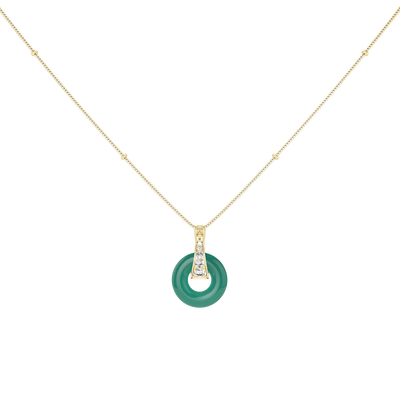
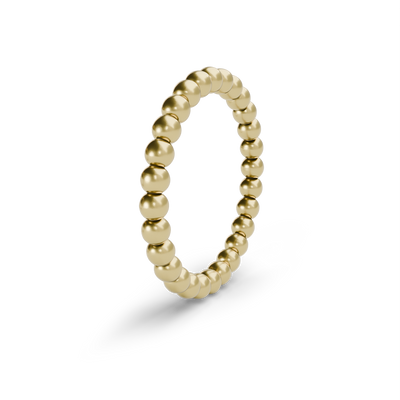
18K gold vermeil at 3 microns. Every gold piece across the Wecord jewellery range, including the gold versions of necklaces, earrings, gold cord bracelets, and the gold finish Atlas rings. These pieces have a sterling silver core and a thick gold layer on the surface. The cleaning approach must protect the gold layer above all else, because once the gold is gone, the piece is no longer gold. There is more on this in the full vermeil vs gold plated guide.
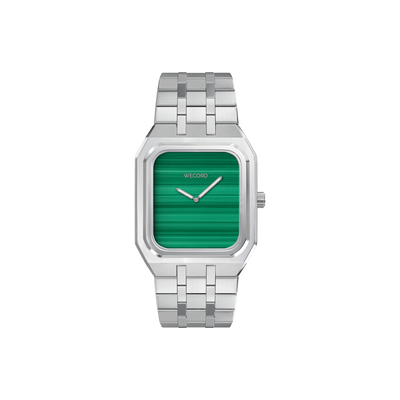
Pieces with natural gemstones. The Atlas Collection with onyx, tiger eye, and lapis lazuli, and the gemstone dial Duke watches with carnelian, malachite, and other natural stones. The cleaning approach must avoid harming the stone, particularly the softer ones like malachite, lapis, and tiger eye, which are more porous than diamonds or quartz.
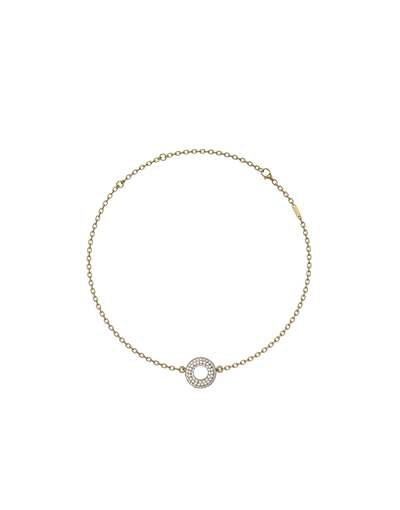
Pieces with lab grown diamonds. The Soho Pavé range and the diamond Duke models. Diamonds themselves are the hardest material on the mineral scale and tolerate gentle cleaning well, but the metal setting around them needs the same protection as any other vermeil or silver piece.
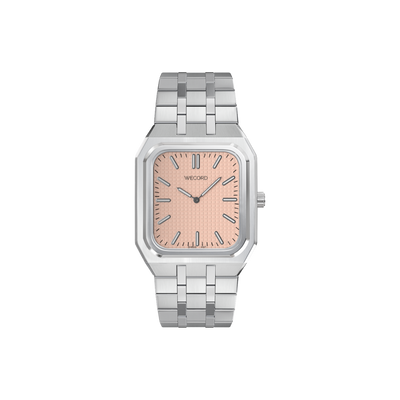
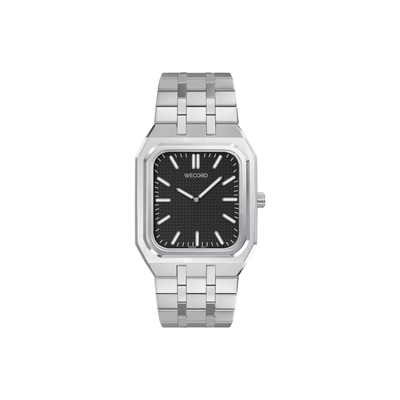
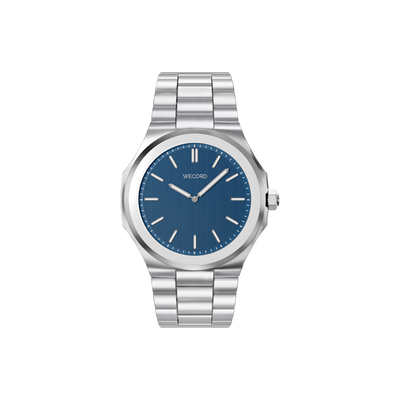
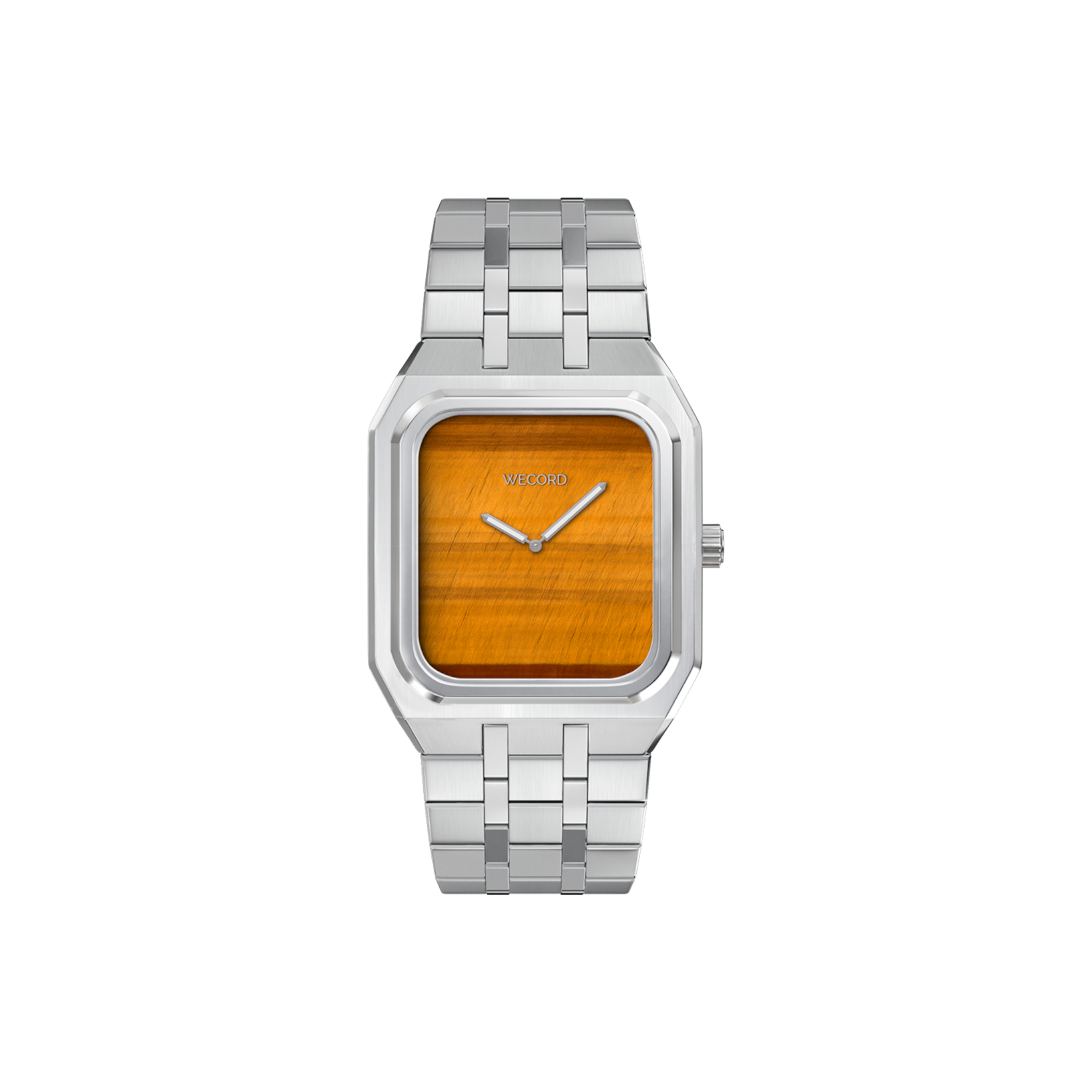
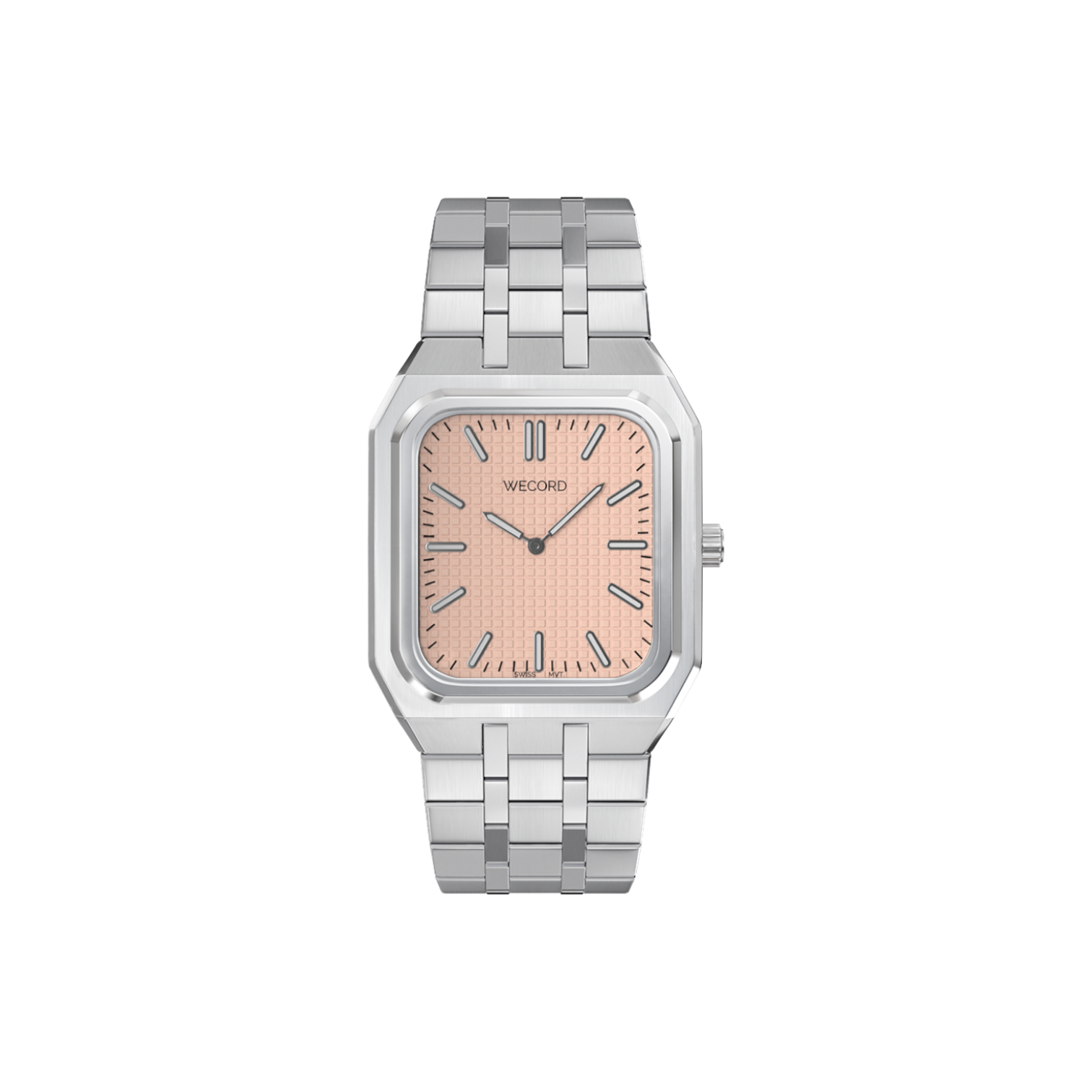
Watches. The Duke Collection and Oliver Collection are 316L stainless steel with sapphire crystal. Watches need a different approach because of the movement inside the case and the seals that maintain water resistance.
The Two Minute Routine for Silver and Vermeil
This is the only home cleaning method you need for almost every piece of fine jewellery. It works for sterling silver with rhodium plating, gold vermeil, pieces with diamonds, and most gemstone pieces. The reason it works is that it does very little. The reason it does very little is that very little is what your jewellery actually needs.
Fill a small bowl with lukewarm water. Add a single drop of mild washing up liquid (Fairy is fine, anything fragrance free is better). Submerge the piece for thirty seconds. Lift it out and gently rub the surface with your fingers. If there is detail in the design, use a soft baby toothbrush with the gentlest possible pressure to reach into the engraving. Rinse under cool running water for ten seconds. Pat dry with a soft microfibre cloth. Done.
This removes the daily build up of skin oils, perfume residue, hand cream, and dust that dulls the surface of jewellery. It does not remove deep tarnish, but if you do this routine every two to three weeks, deep tarnish never appears in the first place. Maintenance prevents the need for restoration.
Deep Cleaning Sterling Silver
If a silver piece has tarnished beyond what the two minute routine can fix, you have two safe options.
The first is a dedicated silver polishing cloth. These are sold by every fine jeweller and most hardware shops in the UK for under £10. They are impregnated with a very mild polishing compound that removes tarnish without scratching. Rub the surface gently in straight lines, not circles, until the brightness returns. The cloth will turn black as the tarnish lifts. This is normal and means it is working. A good polishing cloth lasts months and will refresh dozens of pieces before needing replacement.
The second is a professional clean. Any jeweller can run a piece through an ultrasonic cleaner and a polishing wheel for a small fee. This is genuinely worth doing once a year for pieces you wear daily. The Wecord team can arrange this at the Knightsbridge store.
What to avoid for sterling silver. Anything abrasive. Anything acidic. Anything labelled silver dip. Anything that comes with the words "miracle" or "instant" attached. Tarnish is reversible. Damage to the metal is not.
Cleaning Gold Vermeil (Different Rules Apply)
Gold vermeil cleans differently to silver because the gold layer must be protected at all costs. Even a soft polishing cloth designed for silver can wear through vermeil over time. Vermeil should not be polished. It should be wiped.
For daily care, use a soft microfibre cloth (not a polishing cloth) to wipe the surface gently after wear. This removes oils and residue without removing any gold. For a deeper clean, the same two minute routine above works perfectly. Lukewarm water, one drop of mild washing up liquid, gentle finger rub, rinse, pat dry. That is the entire cleaning process for vermeil.
If a vermeil piece looks dull and the gentle clean does not bring back the shine, what you are usually seeing is the gold layer thinning rather than tarnish on the surface. At that point, the right answer is replating, not more cleaning. Any good jeweller can replate a vermeil piece for a small fraction of the replacement cost, and the piece comes back looking like it did the day you bought it. Aggressive cleaning at this stage just speeds up the loss of remaining gold.
Cleaning Pieces with Natural Gemstones
Natural stones need extra care because some are softer than people assume. Onyx and tiger eye are reasonably hardwearing, sitting at around 6.5 to 7 on the Mohs hardness scale. Lapis lazuli is softer, at around 5 to 6, and porous, which means it absorbs liquids. Malachite is softer still, at around 3.5 to 4, and is one of the more delicate stones in the Wecord range.
For gemstone pieces, the rule is short contact and no soaking. Wipe the stone with a soft, slightly damp cloth. If a stone needs more cleaning than that, take it to a jeweller rather than soaking it at home. Soaking malachite or lapis can dull the polish and dull stones rarely come back without professional polishing.
For the metal setting around a gemstone, the same two minute routine works, but keep the contact short and dry the piece completely afterwards. Trapped moisture under a setting can cause problems over time.
Cleaning Lab Grown Diamonds and the Soho Pavé
Lab grown diamonds are chemically identical to mined diamonds, which means they are extraordinarily hard and tolerate cleaning very well. The challenge with pavé pieces like the Soho Pavé is the metal between the stones, not the diamonds themselves.
For pavé pieces, use the two minute routine but extend the soaking to a full minute and use a soft baby toothbrush to gently brush between the stones. Skin oils and lotion residue collect in the small spaces between diamonds and dull the overall sparkle. A gentle brush with mild soapy water lifts that residue without harming the metal or the stones. Rinse thoroughly to make sure no soap residue remains in the settings, and pat dry.
Avoid ultrasonic cleaners at home for pavé pieces. They are perfectly safe in professional hands but household ultrasonic units are powerful enough to loosen stones from settings on smaller pieces. The professional version uses calibrated frequencies and timed cycles. The supermarket version does not.
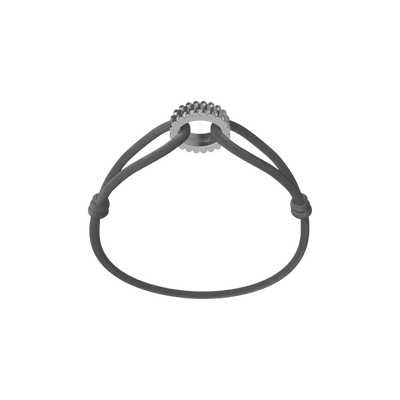
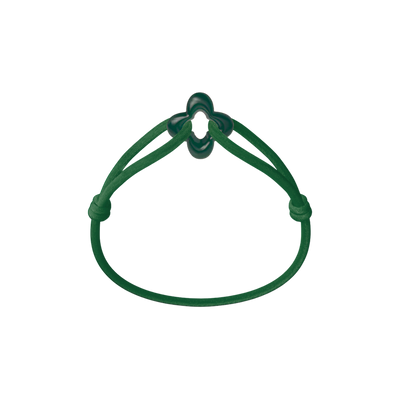
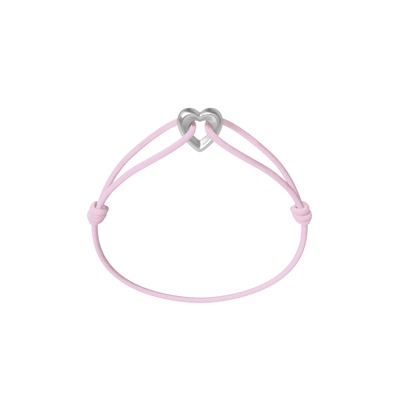
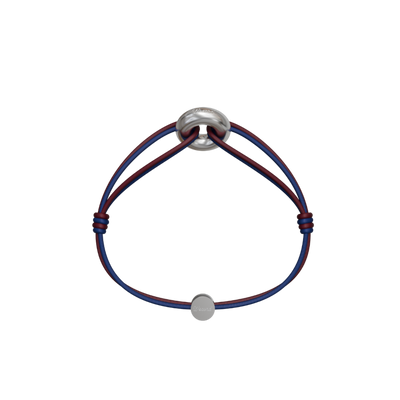
Cleaning Cord Bracelets
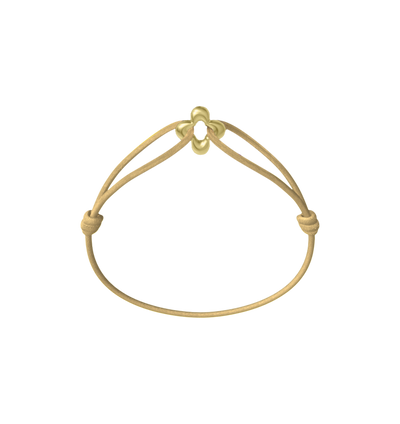
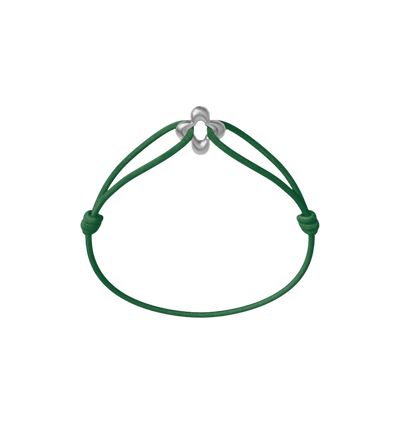
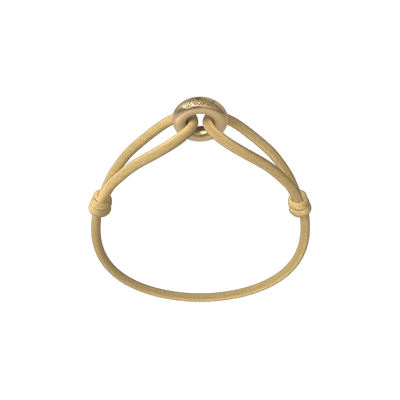
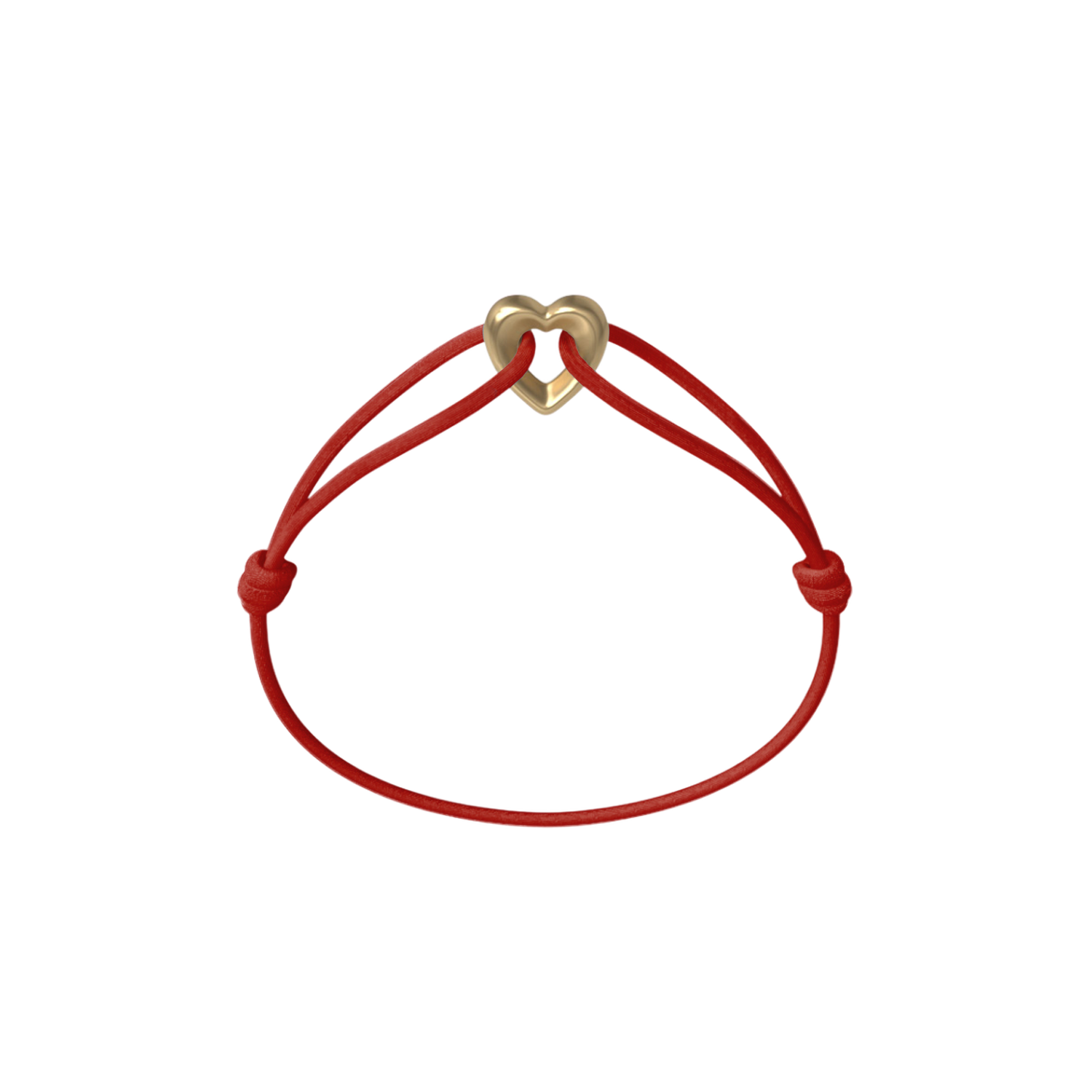
Cord bracelets are different to other jewellery because they have two parts. The metal charm and the cord itself. Each needs its own approach.
The metal charm cleans with the two minute routine. Hold the cord up so only the charm is submerged in the soapy water, then rinse and dry as you would any other piece. Avoid soaking the cord because the cord material absorbs water and dries unevenly, which can cause discolouration on lighter cord colours.
For the cord itself, regular wiping with a slightly damp cloth keeps it looking new. Skin oils and perfume gradually darken white, pink, and lighter coloured cords, particularly along the inside of the wrist where contact is constant. Wiping the cord every few days slows this. If a cord eventually frays at the knot or stretches, the cord can be replaced at a jeweller while the metal charm stays. The piece does not need to be retired because the cord wore out.
Pieces in the cord bracelet range, including the Soho and Regent ranges, are designed to be lived in, but a small amount of care extends their life by years.
Cleaning Watches
Watches need a different approach because of the movement inside the case and the seals that maintain water resistance. Never soak a watch. Never run a watch under a tap. Even watches rated for water resistance have gaskets that age over time and start to leak in ways you cannot see until water has already reached the movement.
For the case and bracelet, use a soft microfibre cloth slightly dampened with lukewarm water. Wipe the case in the direction of any brushing on the metal (Wecord watches have hand brushed finishes that can show against the grain if rubbed in circles). Use a soft toothbrush, dry, to lift dust from between the bracelet links. For more stubborn residue between the links, dampen the toothbrush very lightly and brush gently, then dry the watch with a clean cloth immediately. The goal is to clean without ever creating standing water on the case or around the crown.
Sapphire crystal cleans with a soft cloth. It is the second hardest material used in jewellery after diamond and is essentially scratch resistant in normal wear. A breath of warm air on the crystal followed by a gentle wipe with a microfibre cloth removes fingerprints and lifts the watch back to a like new appearance.
For the leather strap on watches that have one, never use water on the leather. A dry microfibre cloth is enough for daily care. Specialist leather cleaner can be used annually if needed, but most leather watch straps need replacing rather than restoring after three to five years of regular wear.
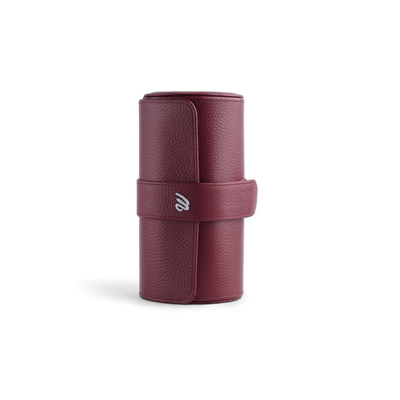
Storing watches properly is the other half of caring for them. The Kensington watch roll protects multiple watches in leather compartments during travel and home storage, which extends both the case finish and the movement reliability simply by reducing shocks. For more on choosing the right watch and wearing it well, the full watches collection includes both Duke and Oliver models.
Storing Jewellery to Prevent Tarnishing
Most tarnish is caused by storage rather than wear. A piece sitting in an open jewellery box exposed to humid air will tarnish faster than the same piece worn daily, because the oils on your skin actually slow oxidation slightly while exposed air accelerates it.
The best storage is a soft pouch or a closed box with anti tarnish strips. Wecord pieces ship in branded pouches that work for this purpose long after the piece arrives. Keep pieces separate from each other so metal does not rub against metal. Pieces with rhodium plating in particular can scratch if pushed against a harder piece in a drawer.
Humidity is the silent enemy. UK homes in winter, with central heating cycling on and off, create exactly the kind of fluctuating humidity that accelerates tarnish. Storing jewellery in a drawer rather than on a dresser, in a closed pouch rather than open air, makes a meaningful difference over the course of a year. A small silica gel packet in the storage drawer adds another layer of protection at almost no cost.
Daily Habits That Extend Jewellery Life
Three simple habits do more for jewellery longevity than any cleaning routine.
Last on, first off. Put your jewellery on after perfume, hairspray, suncream, and moisturiser have dried. Take it off before showering, working out, swimming, or going to bed. Most of the chemical damage to fine jewellery happens in the bathroom rather than the world outside.
Pat dry, do not wipe wet. If a piece does get wet, pat it dry with a soft cloth rather than letting it air dry. Water sitting on a vermeil surface for an hour evaporates and can leave a slight film that dulls the finish.
Rotate pieces. A ring you wear seven days a week ages faster than the same ring worn three days a week. Rotating between pieces gives each one rest and dramatically extends collective life. This is also the unspoken reason stacking culture exists. A stacked wrist of three or four cord bracelets spreads the wear across the whole stack rather than concentrating it on a single piece.
When to Get Professional Help
Some situations call for a jeweller rather than a home clean. Bring a piece in if you notice the gold finish on a vermeil piece looking patchy, if a stone seems loose in its setting, if a watch crown is harder to pull out than usual, or if a clasp on a necklace stops springing back fully. None of these problems get better on their own and most are inexpensive to fix early.
The Wecord team handles cleaning, replating, cord replacement, and minor repairs at the Knightsbridge store. Bringing a piece in for a check up once a year, particularly for pieces with stones or moving parts, prevents small issues from becoming the kind of damage that ends a piece's life. Full address and details on the find us page.
Frequently Asked Questions
What is the safest way to clean silver jewellery at home?
Lukewarm water with a single drop of mild washing up liquid, applied with your fingers or a very soft baby toothbrush, then rinsed and patted dry with a microfibre cloth. This works for sterling silver, vermeil, diamonds, and most gemstone pieces. It is gentler than every popular hack circulating online and protects the rhodium or gold plating that gives the piece its finish.
Why should I avoid baking soda and toothpaste on jewellery?
Both are abrasive. They work on tarnish by physically scrubbing silver away. On solid sterling silver this thins the metal over time. On rhodium plated silver or gold vermeil, they strip the plating in just a few cleans, ageing the piece by years in a single session. The bright silver underneath is not the same as the bright silver finish, and once the plating is gone, the piece tarnishes far faster than before.
Can I clean gold vermeil the same way as silver?
You can use the same gentle soap and water method, but you must skip polishing. Vermeil should be wiped, never polished. Polishing cloths designed for silver can wear through the gold layer over time. For deeper restoration of vermeil, replating by a jeweller is the right answer rather than aggressive home cleaning.
How do I stop my silver jewellery from tarnishing?
Storage matters more than cleaning. Keep silver pieces in a closed pouch or box with low humidity, separated from each other. Wipe the piece with a soft cloth after wear to remove skin oils. Keep silver away from chlorinated water, salt water, and household cleaning products. With these habits, rhodium plated silver from Wecord stays bright for years between deep cleans.
How often should I clean my jewellery?
For pieces worn daily, a quick wipe after wear and a two minute soapy water clean every two to three weeks is enough. For pieces worn occasionally, a clean before wearing and a clean before storing is enough. A professional clean once a year for pieces with stones or moving parts catches anything home care misses.
Can I shower with my jewellery on?
It is best not to. Soap, shampoo, and shower gel residue collect on the surface and dull the finish over time. Hot water also accelerates wear on plated finishes. The simple habit of removing jewellery before showering and putting it back on after dressing extends the life of every piece you own.
How do I clean a watch without damaging it?
Use a soft microfibre cloth, slightly dampened with lukewarm water, to wipe the case and bracelet. Never submerge a watch in water, even if it is rated for water resistance. The seals that protect the movement age over time and can let in water in ways you cannot see. For a thorough clean of the bracelet links, a soft dry toothbrush is the safest tool. Sapphire crystal wipes clean with a microfibre cloth alone.
Can I use jewellery cleaner solutions on Wecord pieces?
Avoid silver dip solutions on any plated piece. They strip rhodium and gold layers quickly. Mild jewellery soaks designed for delicate pieces can be safe, but the simple soap and water method works just as well without the risk. If in doubt, soap and water is always the right answer for vermeil, rhodium plated silver, and pieces with stones.
What should I do if my vermeil piece looks dull?
Try the gentle soap and water clean first. If the dullness remains, the gold layer is likely thinning rather than tarnished. At that stage, replating restores the piece to original brightness for a small fraction of the cost of replacing it. The Wecord team can arrange replating at the Knightsbridge store, which is detailed on the find us page.
How do I clean a cord bracelet?
Hold the cord up so only the metal charm is submerged in soapy water. Clean the charm using the two minute routine, rinse, and pat dry. For the cord, wipe with a slightly damp cloth. Avoid soaking the cord because cord material absorbs water and dries unevenly, which can discolour lighter cord colours. The cord itself can be replaced at a jeweller after a year or two of daily wear, while the metal charm continues indefinitely.
Where can I get my Wecord jewellery professionally cleaned?
Visit the Wecord store at 60 Beauchamp Place in Knightsbridge, London. The team handles cleaning, replating, cord replacement, and minor repairs in person. For pieces worn daily, an annual professional clean catches small issues early and keeps every piece looking the way it did the day you bought it. Full details on the find us page.
Read more
The tradition of giving a specific gift for each wedding anniversary goes back further than most people realise. The earliest examples come from medieval Germany, where husbands marked twenty five ...

Walk through Shoreditch on a Saturday, sit on the District Line during commute hour, or scroll past a few thousand UK couples on Instagram, and you will spot the quiet trend that has built momentu...